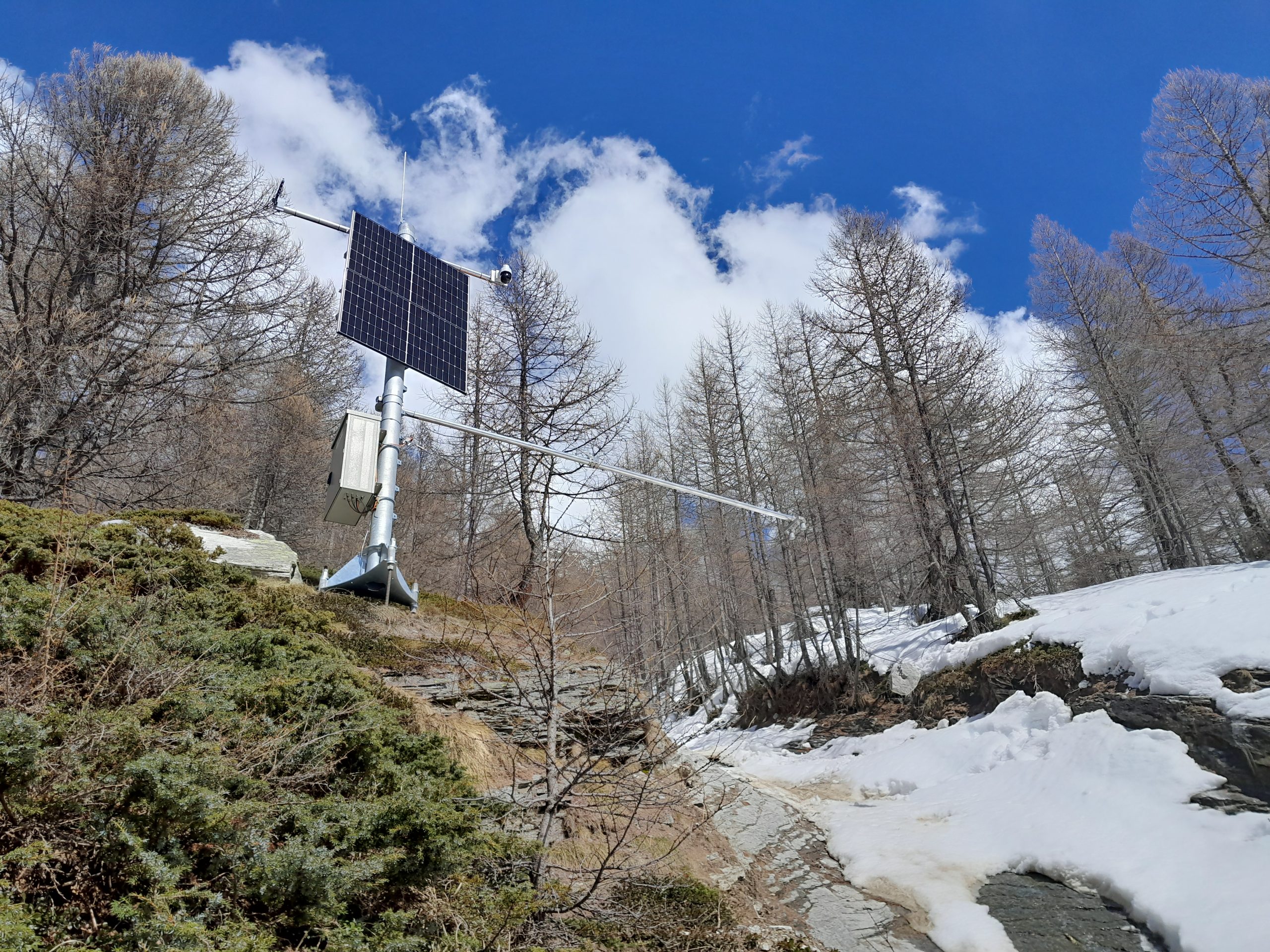
Sophisticated monitoring system at the Simplon Pass, Switzerland
Challenge
The Simplon Pass is one of the most important transalpine transport routes in Switzerland. It connects the Rhone Valley in Valais with the Italian Val d’Ossola and lies at an altitude of 2006 meters above sea level. Due to its year-round trafficability, the Simplon is particularly important for heavy and hazardous goods traffic, as many transports are not allowed to pass through the Gotthard tunnel. However, the topography and geological conditions in this high mountain region make the infrastructure particularly susceptible to gravitational natural hazards such as rockfalls, debris flows and landslides.
On June 29, 2024, a massive debris flow occurred above the Engi snow shed following heavy rainfall. Debris from the Hübschhorn rock glacier were mobilized and buried several meters of the pass road. There were no injuries, but the national road had to be closed immediately. The clean-up work proved to be difficult and dangerous due to the continuing unstable situation and the risk to which workers were exposed.
Solution
On behalf of the Federal Roads Office (FEDRO) and in collaboration with natural hazard experts from geoformer igp AG, GEOPREVENT developed a comprehensive monitoring system in just a few weeks. The solution consists of two central components: a warning system for long-term monitoring of the Hübschhorn block glacier and an alarm system for immediate response to short-term hazard processes such as rockfalls or debris flows.
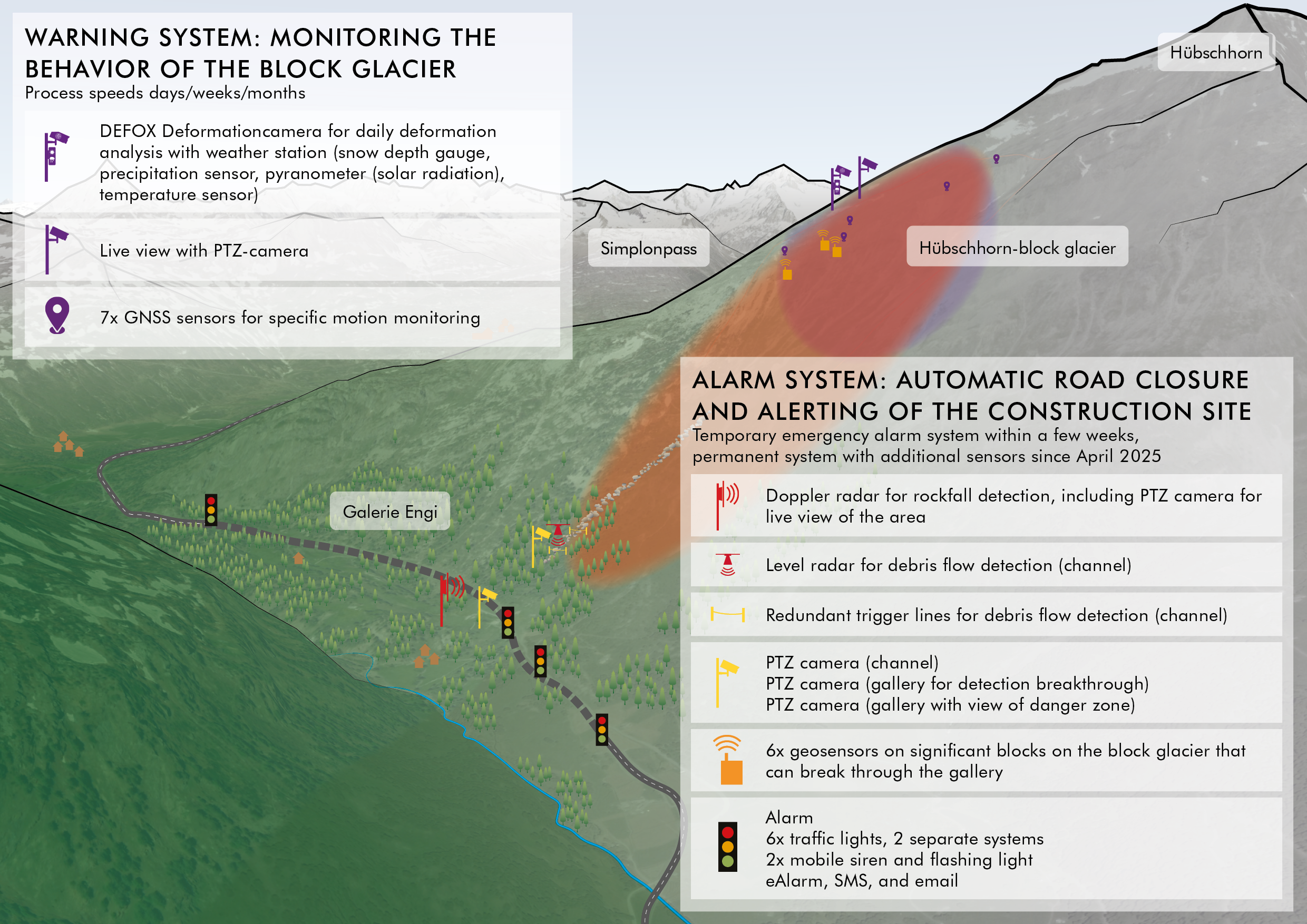
Schematic representation of the monitoring system on the Simplon Pass.
Warning system:
The warning system is used to continuously monitor the glacier area above the pass road. Various measuring techniques are used for this. A high-resolution 42 megapixel DEFOX PRO camera provides hourly images of the entire rock glacier field, which are automatically analyzed in order to detect large-scale deformations. The visual monitoring is supplemented by a solar-powered PTZ camera, which enables remote live assessment via the GRAVX online data portal. A weather station was also set up to assess external influencing factors, providing continuous data on precipitation, temperature, snow depth and solar radiation.
Several GNSS sensors were installed on the glacier to record three-dimensional movement (point monitoring).
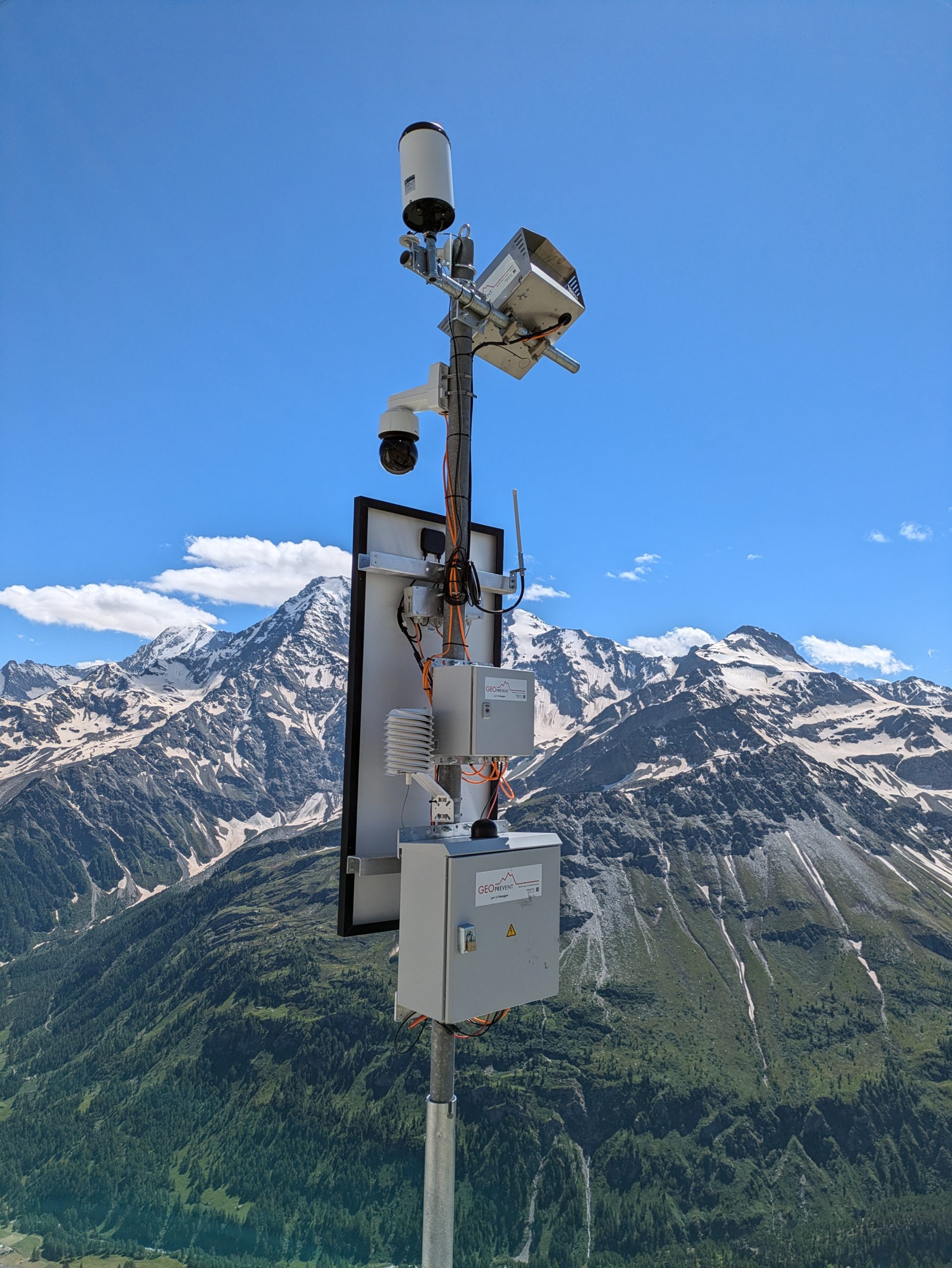
42 MP DEFOX PRO camera with weather station close to the rock glacier.
Alarm system:
While the warning system focuses on longer-term developments, the alarm system was designed for immediate detection and automatic intervention in the event of acute hazardous events. Rockfalls and debris flows in particular can occur within a few seconds, especially after heavy rainfall. The reaction time between the detection of an event and the possible impact of a block of rock on the gallery is only around 30 to 50 seconds. For this reason, the system is redundant and highly automated.
A rockfall radar, based on Doppler technology, was installed at the foot of the slope and detects moving objects with high accuracy. In the event of an incident, the radar automatically activates a coupled PTZ camera, which monitors the slope in real time.
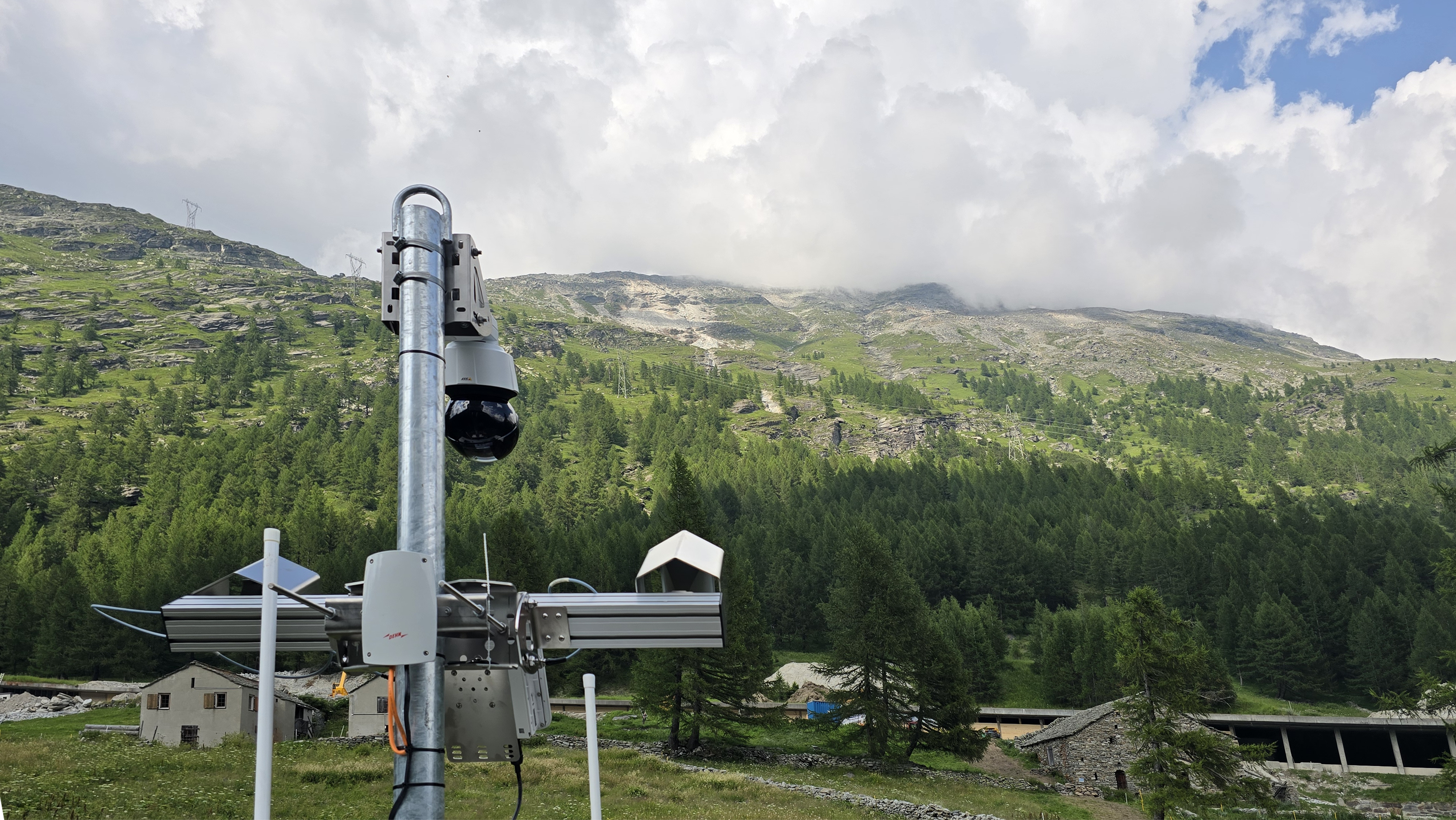
Doppler Radar with control cabinet at the bottom of the slope.
In addition, a water level radar is installed in the endangered debris flow channel to detect sudden changes in the water level. This enables the early identification of debris flows. To supplement the system, trigger lines were stretched over the channel at the same location, which immediately trigger an alarm if they come into contact with moving material. Further PTZ cameras were installed at strategically important points, including in and on the gallery, to ensure complete visual control of the danger zone.
As six large boulders within the rock glacier are moving and considered potentially dangerous, they were equipped with motion sensors. These detect the smallest movements and enable a rapid assessment of the stability of these boulders.
If an event is detected, the alarm is triggered automatically in a redundant way. The road is immediately closed by six traffic lights, distributed across two independent systems. In addition, construction workers in the danger zone are warned acoustically and visually by two mobile sirens in combination with flashing lights. At the same time, the emergency services and specialists are alerted digitally via the eAlarm system by text message, email and direct web access. The situation can be continuously monitored and assessed remotely via the GRAVX data portal.
More information
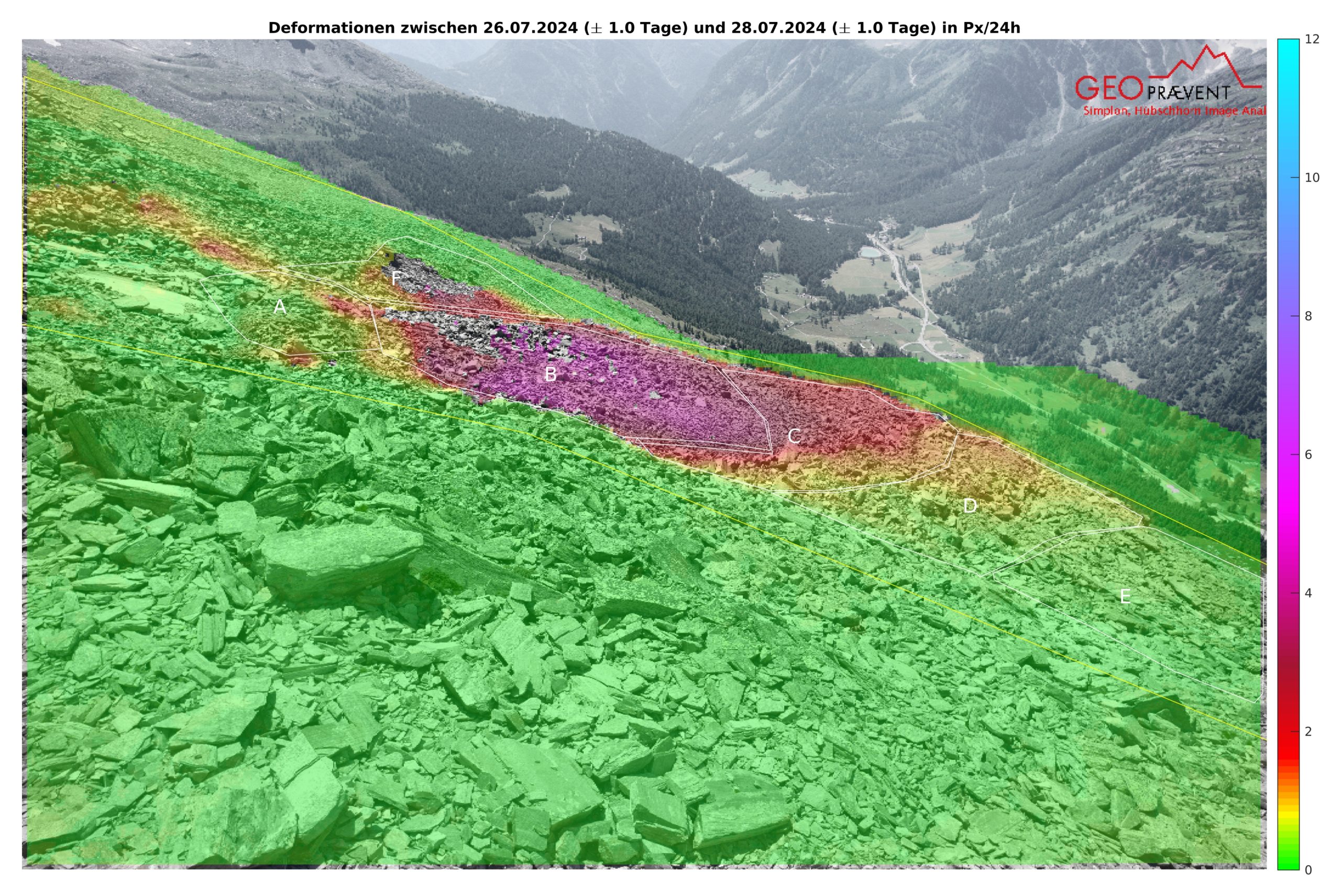
Automated daily deformation analysis of the Hübschhorn block glacier.
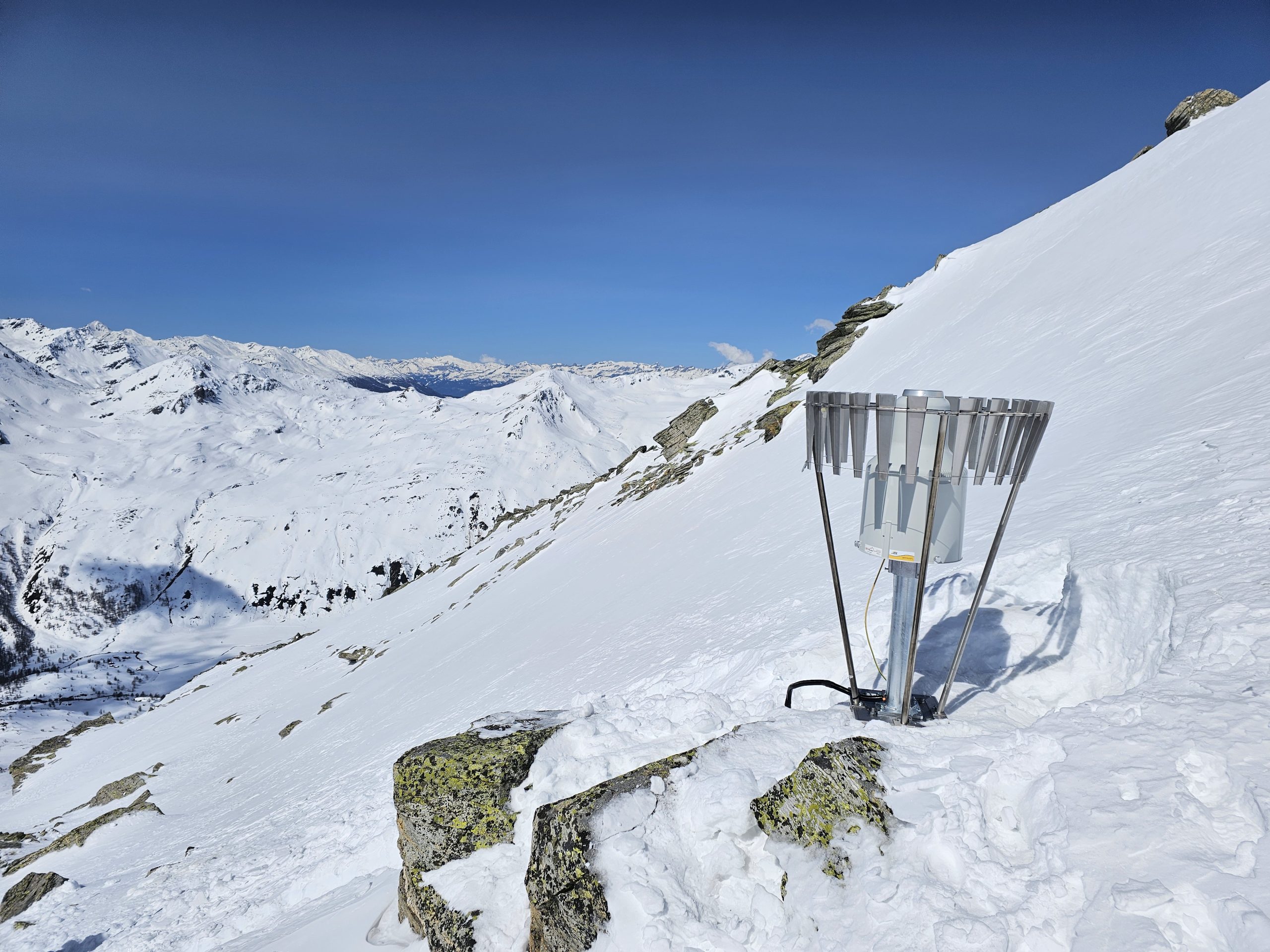
Rain sensor (Pluvio) at the Hübschhorn block glacier.
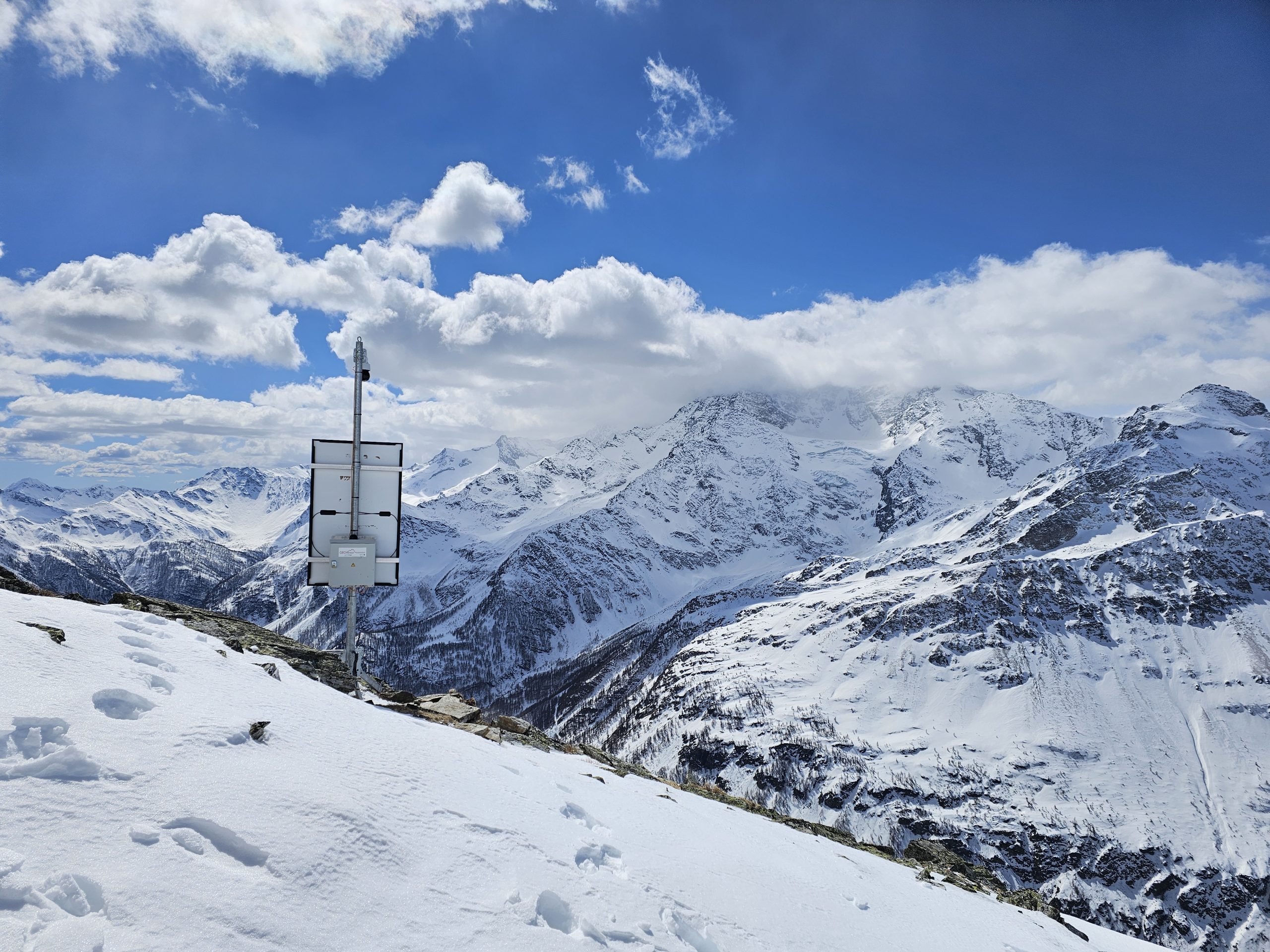
Solar-powered PTZ camera at the block glacier for visual assessment (live).
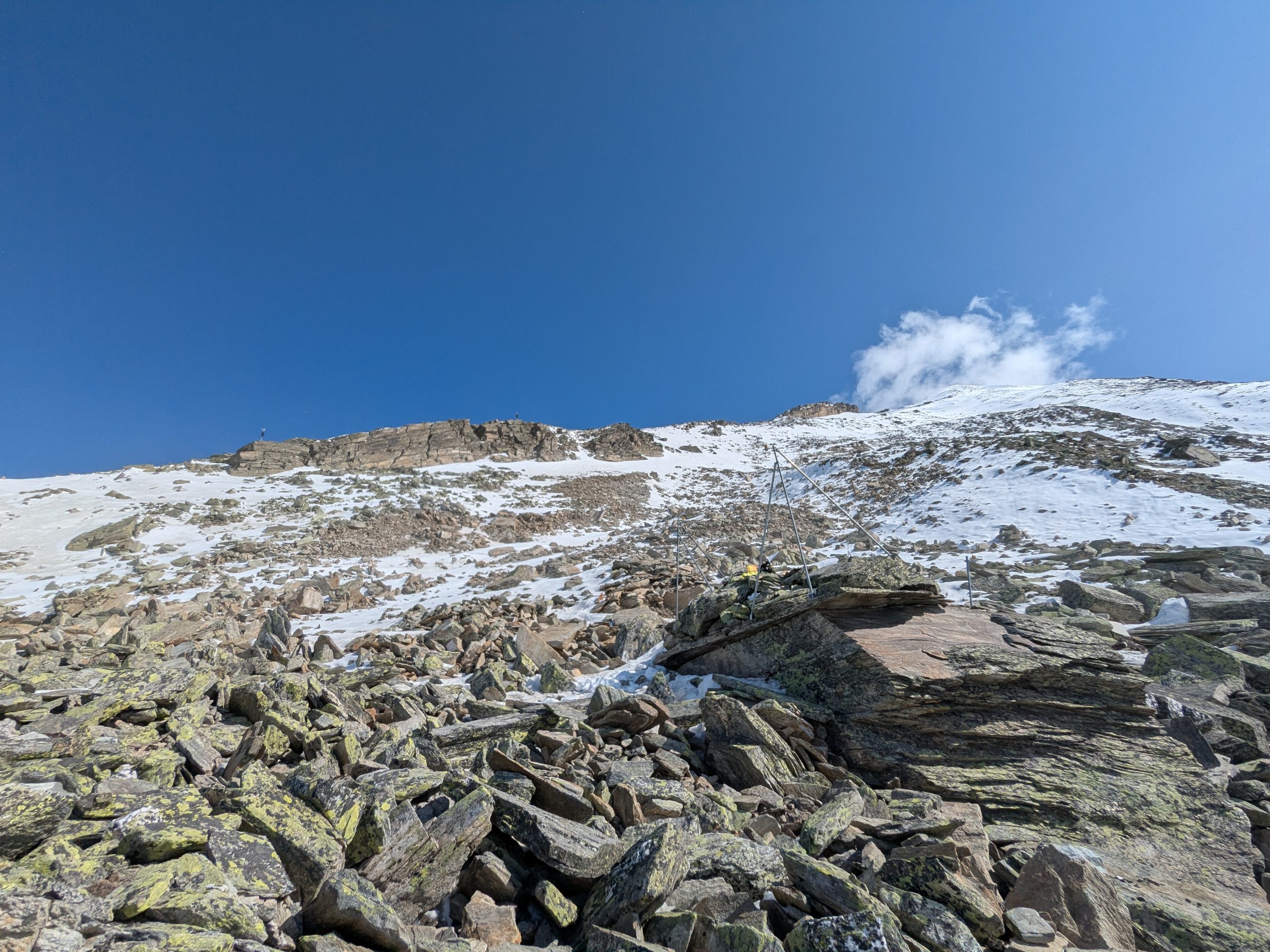
Monitored large block in the Hübschhorn block glacier.
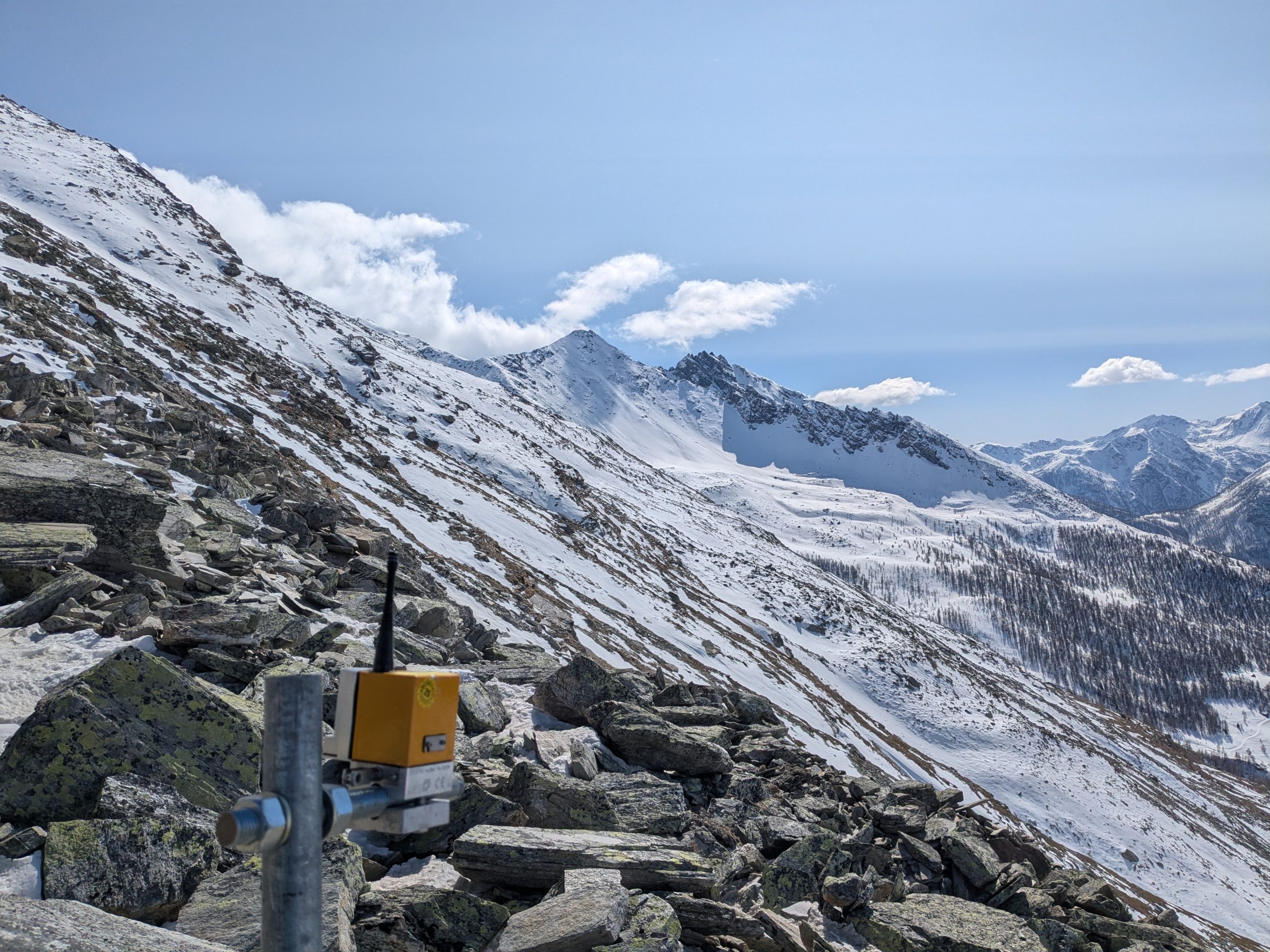
Geosensor on one of the large blocks in the block glacier.