Level measurements
Level measurements or stream gauges are important components of any debris flow and flood monitoring station. When rivers transport a lot of debris, measuring their flow height can be challenging, but modern laser and radar gauges in combination with specialized algorithms can produce reliable measurements. For rivers and lakes with low sediment content, pressure gauges can be the best option.
Technology
Depending on the situation, these different technologies can provide level measurements:
Radar and laser gauges, pressure sensors, ultrasound sensors or trigger lines.
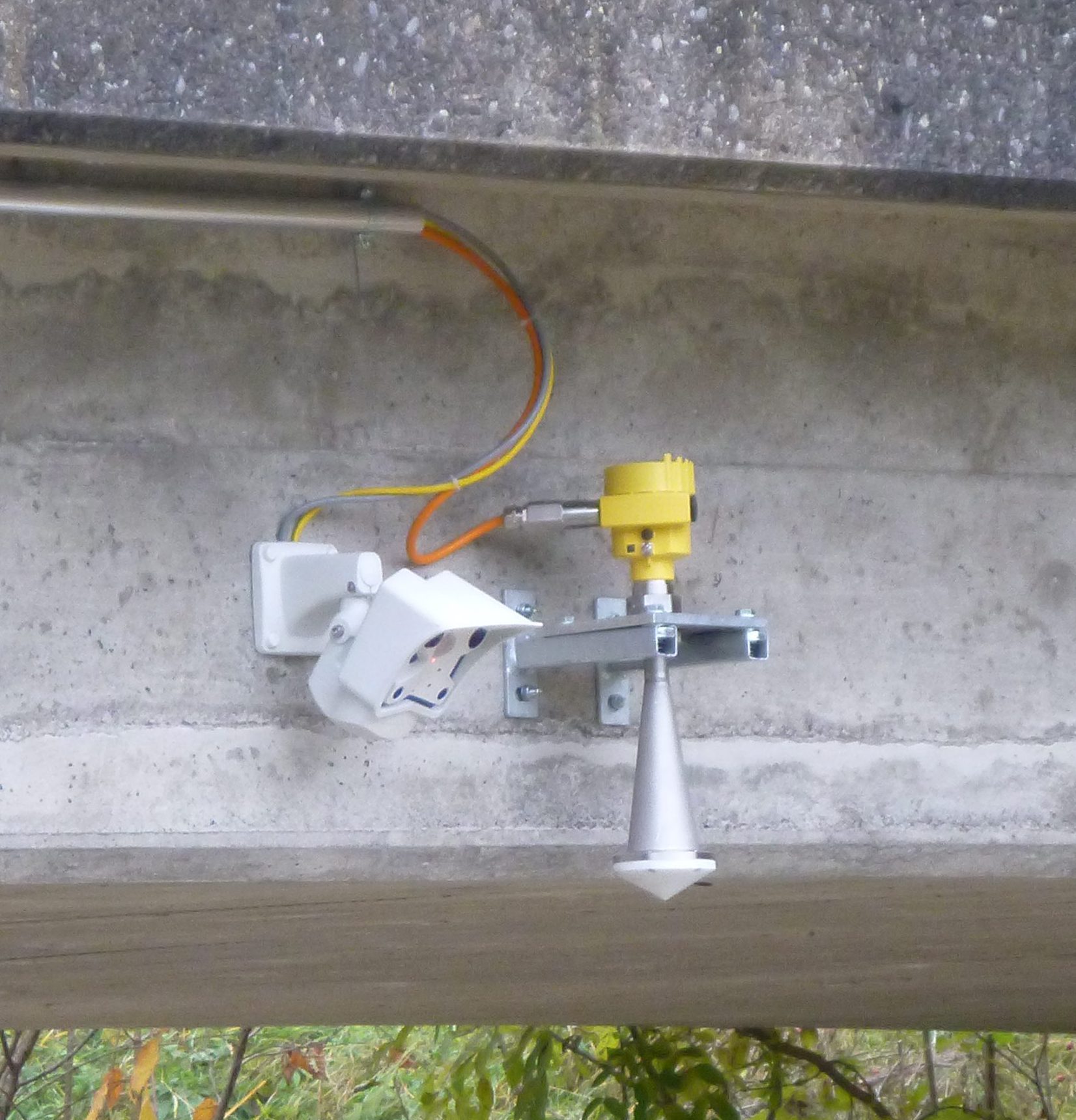
Radars are very commonly used. They reliably measure the distance from the radar to the surface under all weather conditions, both day and night. The non-contact measurement, low maintenance requirements, and reliable operation are key advantages of radar systems. In addition, they enable continuous measurement of discharge, transmission of measurement data to an online portal, and remain operational both before and after an event (in contrast to pressure sensors and tripwires).
Lasers share many of the advantages of radar systems. In addition, the laser beam is more strongly focused than radar, which can be beneficial for level measurements in narrow gorges. The main disadvantage is that rain and snow can affect the laser and thus interfere with the measurement. GEOPREVENT therefore recommends the use of radar systems.
Pressure sensors are installed in the water and measure pressure. As long as no bedload transport is present, pressure sensors are a good alternative (or redundant solution) to radar systems. It is recommended to regularly inspect the pressure sensor (e.g., for sand deposits inside the housing).
Ultrasonic sensors are suitable for shallow, non-turbulent surfaces. However, the measurement distance is limited to a few meters, and rain and snow can distort the measurements.
Trigger lines are a simple and cost-effective alarm solution. Objects such as stones are mounted on a trigger line above the water surface; during high water, they are detected and the trigger line is triggered, activating the alarm. The disadvantages are that no continuous level measurement is possible and that the trigger lines must be replaced after each event. However, they can be well suited as an additional or redundant technology.
Applications
Level measurements are used in a wide range of monitoring systems, particularly for debris flows, avalanches, flood waves, and high-water events.
The following projects illustrate the applications of level measurements:
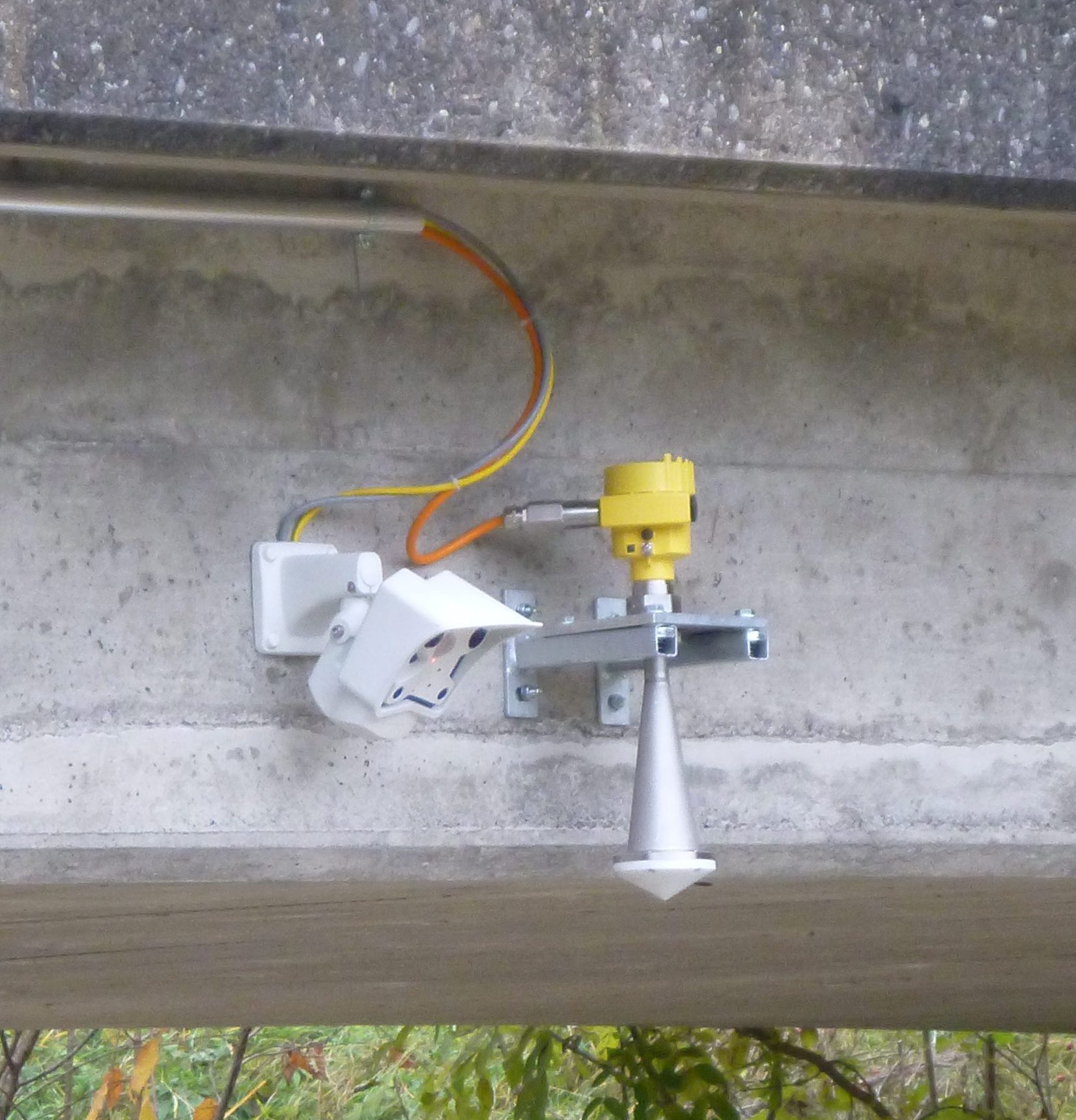
The level radar (yellow) measures the distance to the water surface. The webcam (white) provides additional valuable imagery.
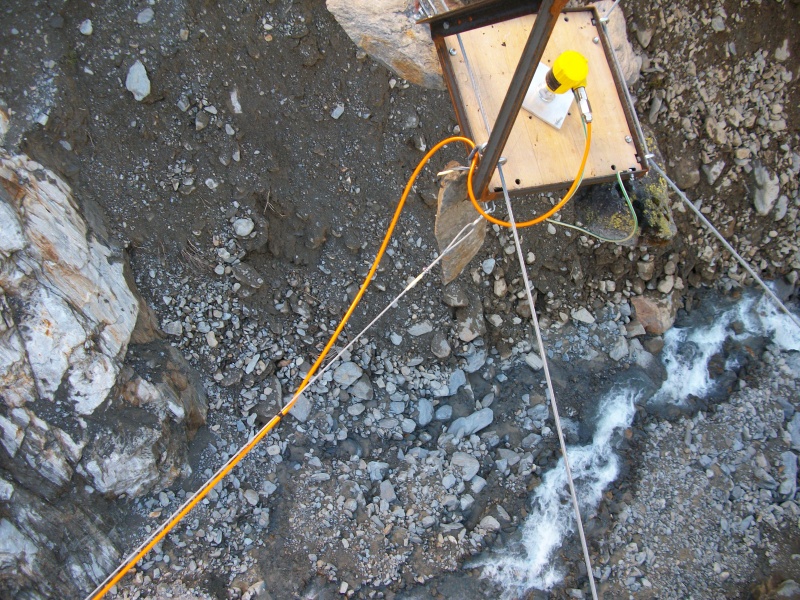
The level radar monitors the debris flow channel.
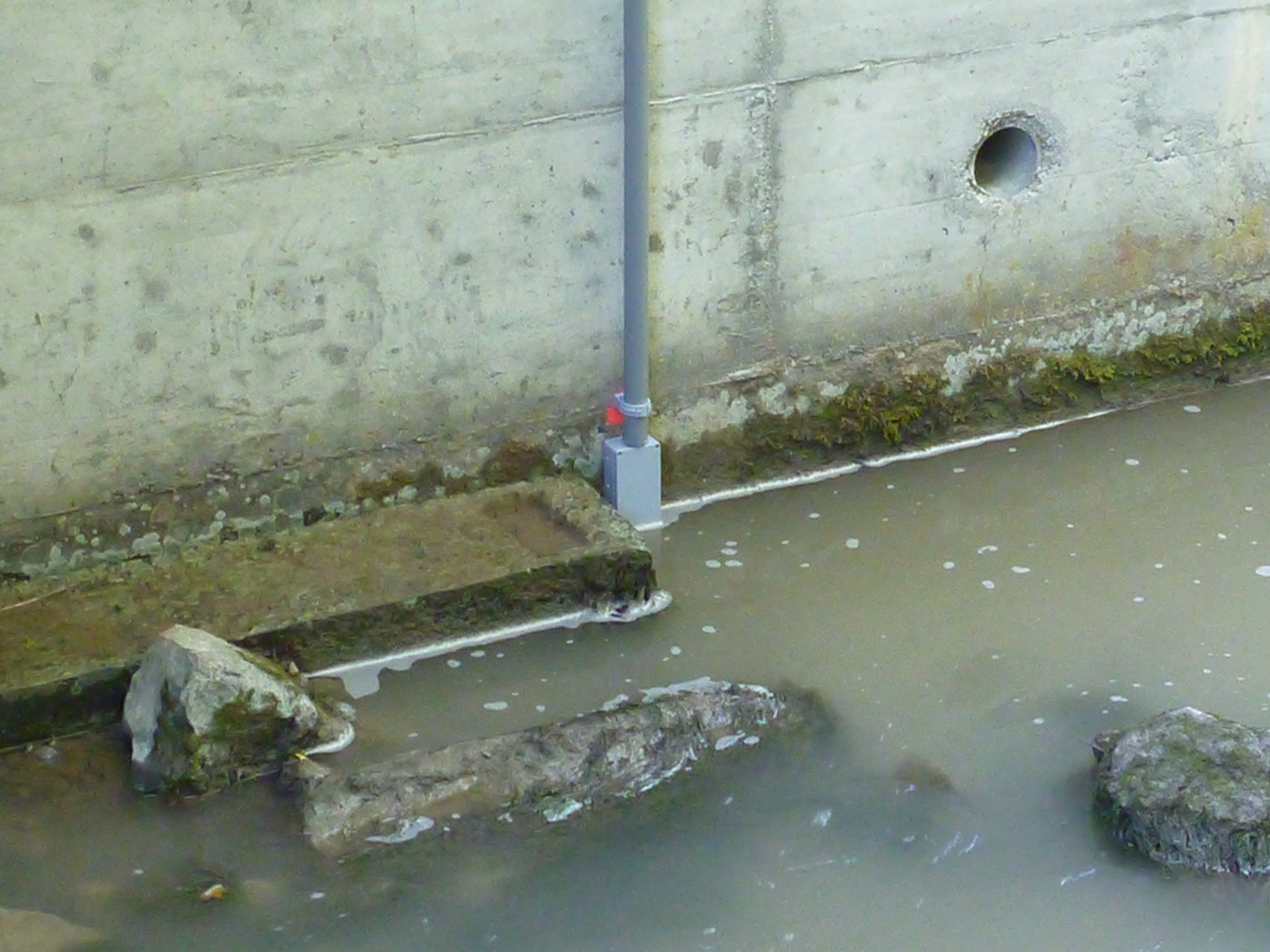
For glacial lakes or streams without sediment transport, the use of a pressure sensor is also recommended.
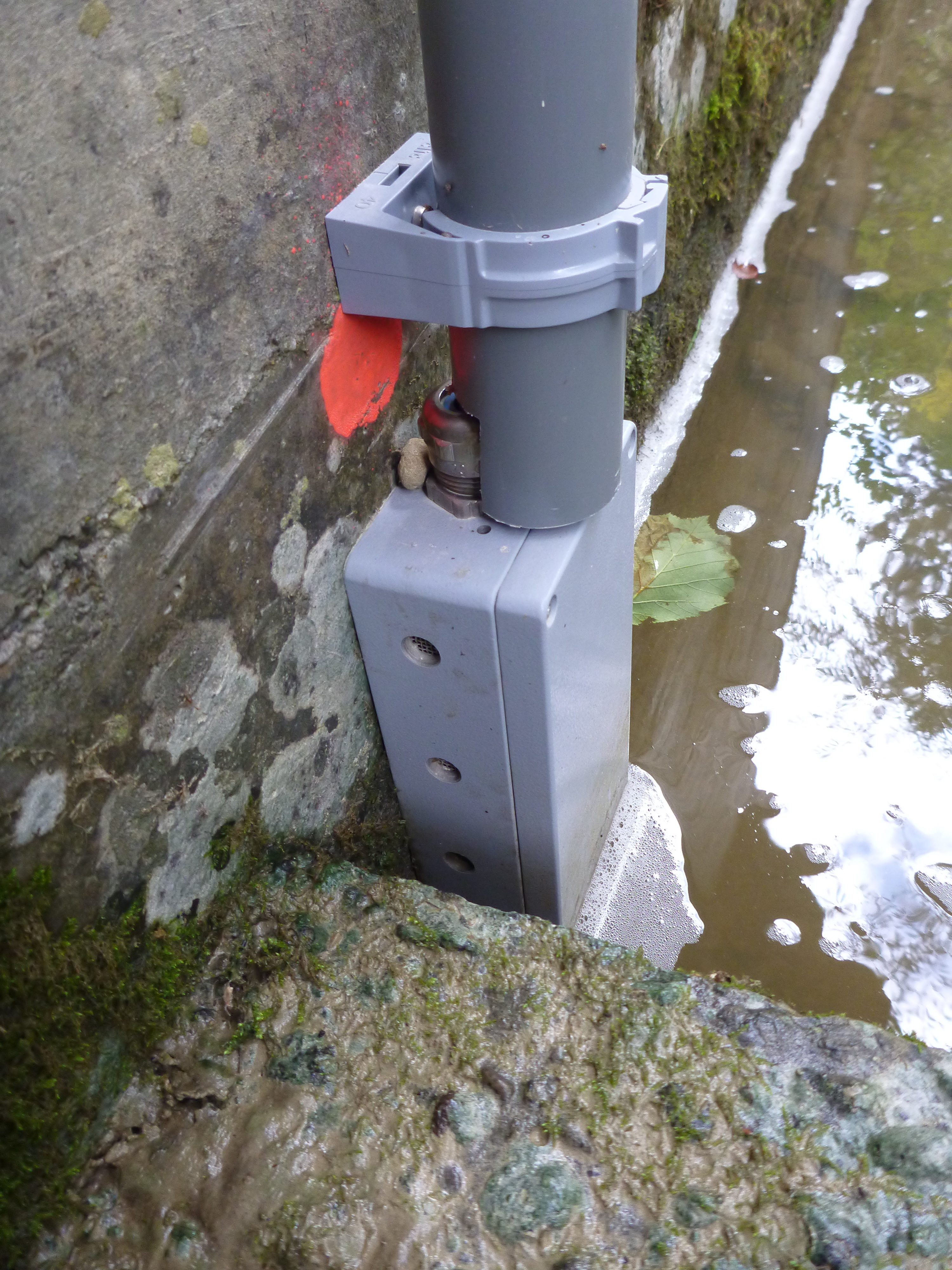
The pressure sensor should be checked regularly for sand deposits.
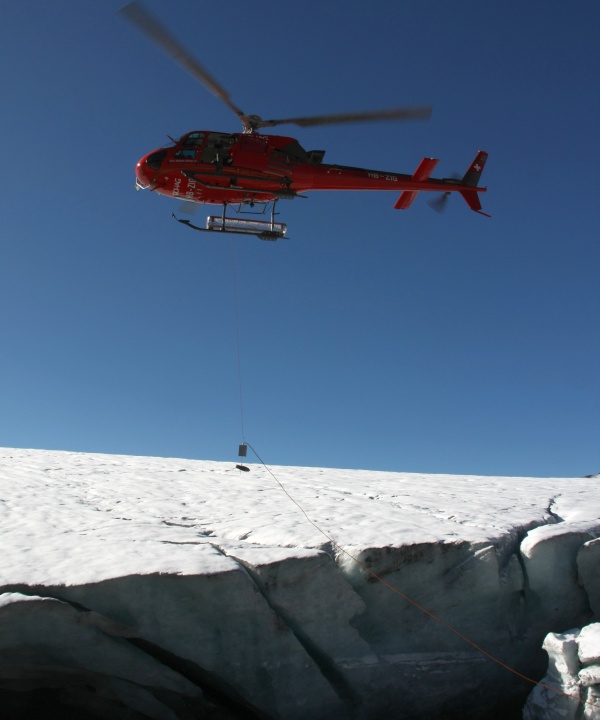
Installation of a pressure sensor into a glacial lake using a helicopter.
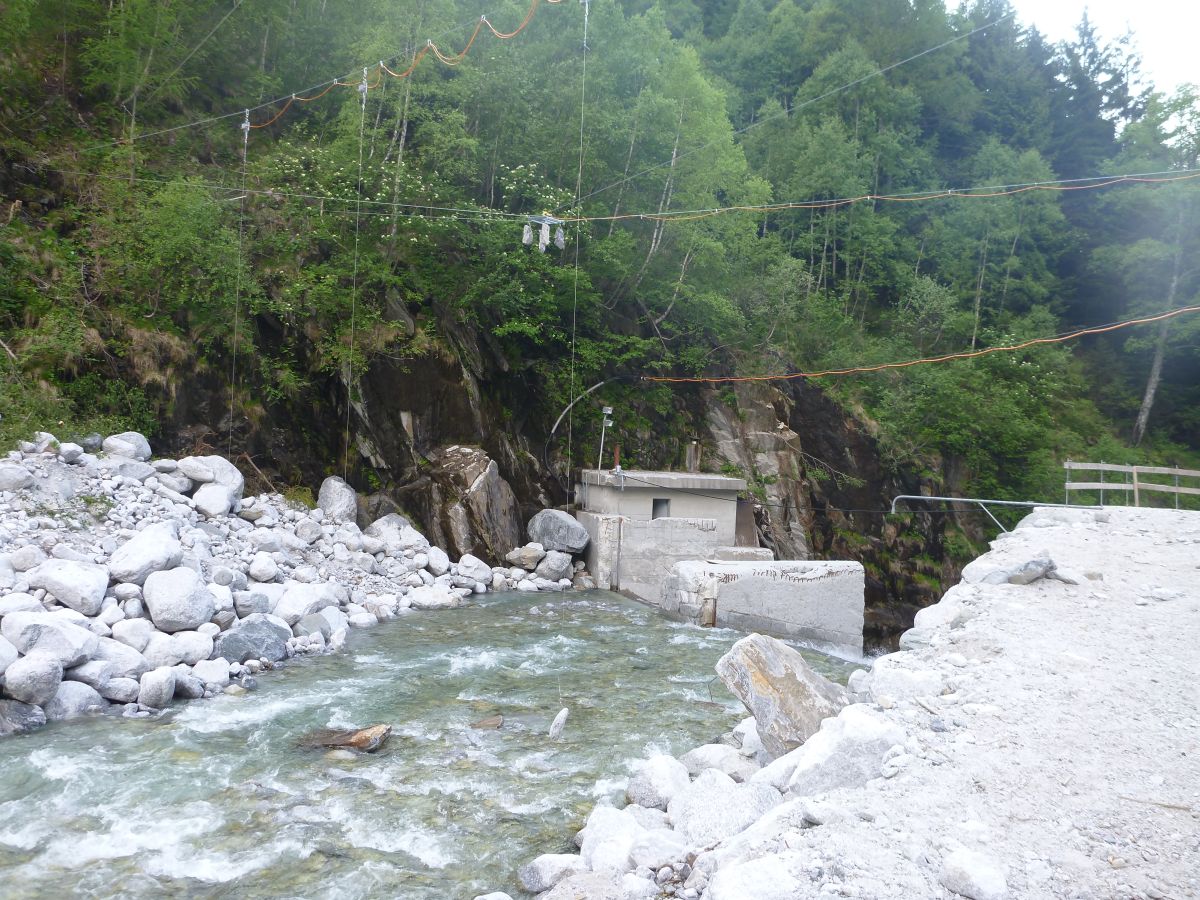
Trigger lines are a simple and cost-effective type of alarm system. However, continuous monitoring is not possible, and they must be replaced after each event.
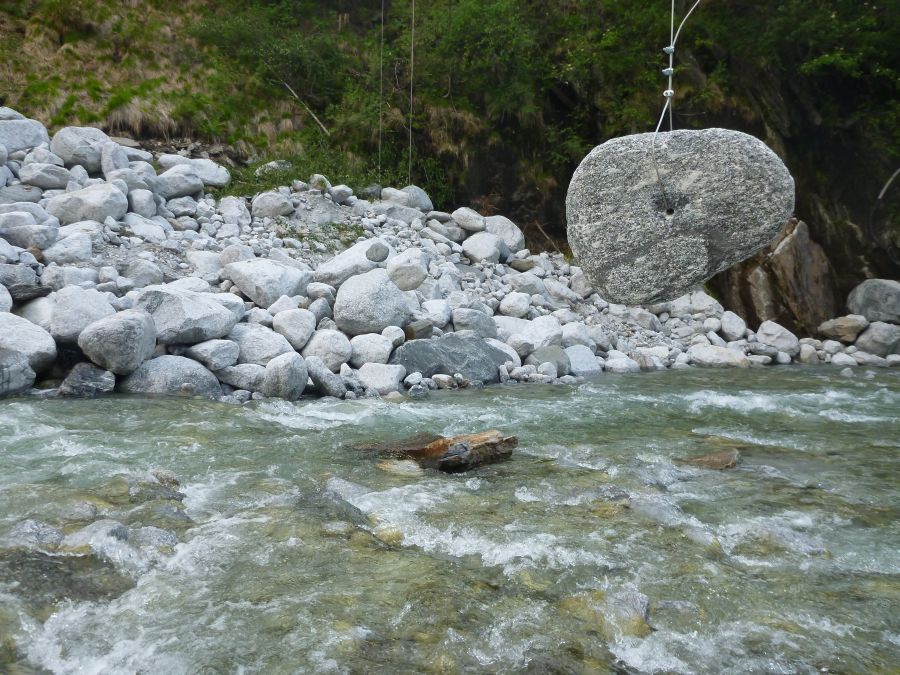
An object (here a stone) is attached to the end of the trigger line. In the event of an incident, it is carried away and triggers the alarm.
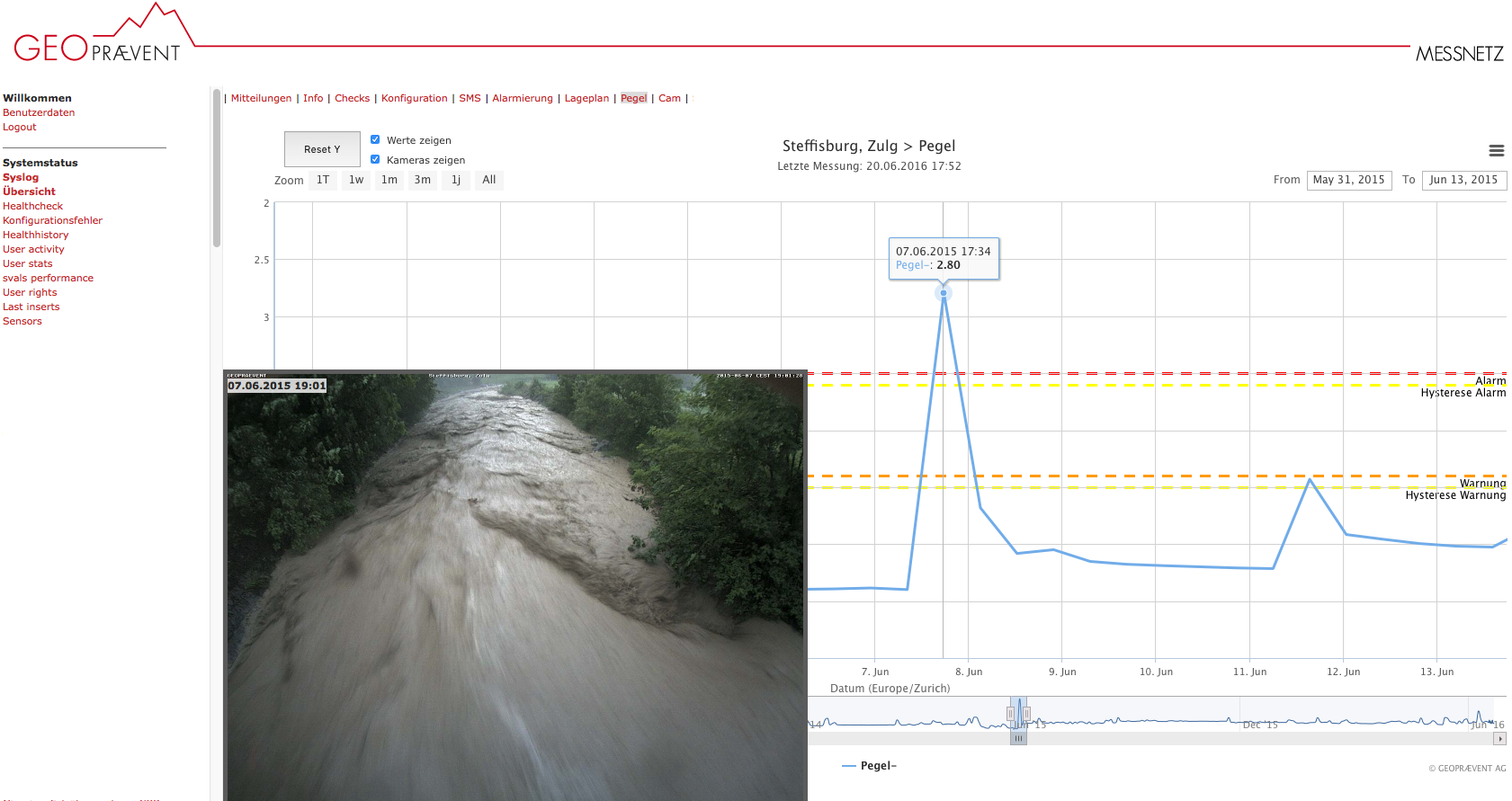
The data from the radar, pressure sensor, or laser are displayed in the online portal. Webcam images are integrated into the charts.
Additional technologies
The following projects are often combined with the applications of level measurements:
- Webcams
- Interferometric georadar
- Weather stations
- Online data portal
- Reliable alerting